

Music licensing sits at the crossroads of art and business. You might think it is all about paperwork and contracts. Shockingly, over £1 billion in global music licensing revenue was paid out to artists last year.
But most musicians miss out because they do not fully understand how simple it can be to start earning from their songs. The hidden truth is that music licensing is less about legal headaches and more about unlocking steady income and creative freedom, even for complete beginners.
Table of Contents
- Defining Music Licensing And Key Terms
- Types Of Music Licences And Their Uses
- How Music Licensing Impacts Musicians
- Steps To License Your Music As An Artist
Quick Summary
| Takeaway | Explanation |
|---|---|
| Understand key music licensing types | Knowing about synchronization, performance, and mechanical licenses helps you secure income. |
| Build a strong musical portfolio | A well-organised portfolio showcases your works, attracting potential licensees and collaborations. |
| Engage with licensing platforms | Use digital marketplaces and PROs to navigate licensing efficiently and connect with users. |
| Protect your creative rights | Register your works and maintain records of agreements to safeguard your intellectual property. |
| Network actively in the industry | Connect with music supervisors and attend events to increase opportunities for song placements. |
Defining Music Licensing And Key Terms
Music licensing might sound like a complex maze of legal jargon, but at its core, it’s simply about ensuring artists get paid for their creative work. Imagine your music as a precious piece of art that can be used in various ways – from a YouTube video to a blockbuster film soundtrack. Music licensing is the magical bridge that connects your musical creation with those potential opportunities while protecting your rights and ensuring you receive fair compensation.
The Fundamental Concept of Music Licensing
At its most basic level, music licensing is a legal agreement that grants permission to use a specific musical composition or recording under defined conditions. Think of it like renting out a beautifully crafted instrument – you’re allowing someone to play it, but you still own the original piece. This means that when another entity wants to use your music, they must obtain a formal license and typically pay a fee for that privilege.
The licensing process involves several key players. The copyright holder (usually the songwriter or composer) grants permission through various types of licenses. These might include synchronisation licenses for film and TV, mechanical licenses for reproducing recordings, or performance licenses for public performance. Each license type has specific rules and compensation structures that protect the artist’s intellectual property.
Key Terminology Every Artist Should Know
Navigating the world of music licensing requires understanding some critical terms. Unpack the essentials of music licensing with these fundamental concepts:
- Synchronisation License: Permits the use of a musical composition in visual media like films, advertisements, or video games. This is where your track could potentially soundtrack a dramatic movie scene or a quirky commercial.
Master Use License: Specifically covers the rights to use a particular sound recording. If someone wants to use your exact recording (not just the composition), they’ll need this license.
Performance Rights: Enables public performance of your music, whether that’s in a café, on the radio, or during a live streaming event. Performing Rights Organisations (PROs) like PRS typically manage these on behalf of artists.
Protecting Your Musical Intellectual Property
Understanding music licensing isn’t just about potential income – it’s about safeguarding your creative work. Each license serves as a legal contract that defines exactly how, where, and for how long your music can be used. This protects you from unauthorised usage and ensures you have control over your artistic output.
In the digital age of 2025, music licensing has become more nuanced and accessible. Streaming platforms, sync licensing agencies, and online marketplaces have made it easier for independent artists to monetise their music. However, this also means artists need to be more informed and proactive about understanding their rights.
Remember, every time your music is licensed, you’re not just earning money – you’re expanding your artistic reach and potentially opening doors to incredible opportunities. Whether it’s a small indie film or a global advertising campaign, each license represents a chance to share your musical voice with a broader audience.
Ready to dive deeper into music licensing? Join Music Gateway and unlock a world of professional music management and licensing opportunities that can transform your artistic career.
Types Of Music Licences And Their Uses
The world of music licensing is as diverse and intricate as the musical compositions themselves. Just like a Swiss Army knife has different tools for specific tasks, music licensing offers various types of licenses designed to address unique scenarios and protect artists’ creative works. Understanding these different licenses is crucial for any musician looking to monetise their art and maintain control over their intellectual property.
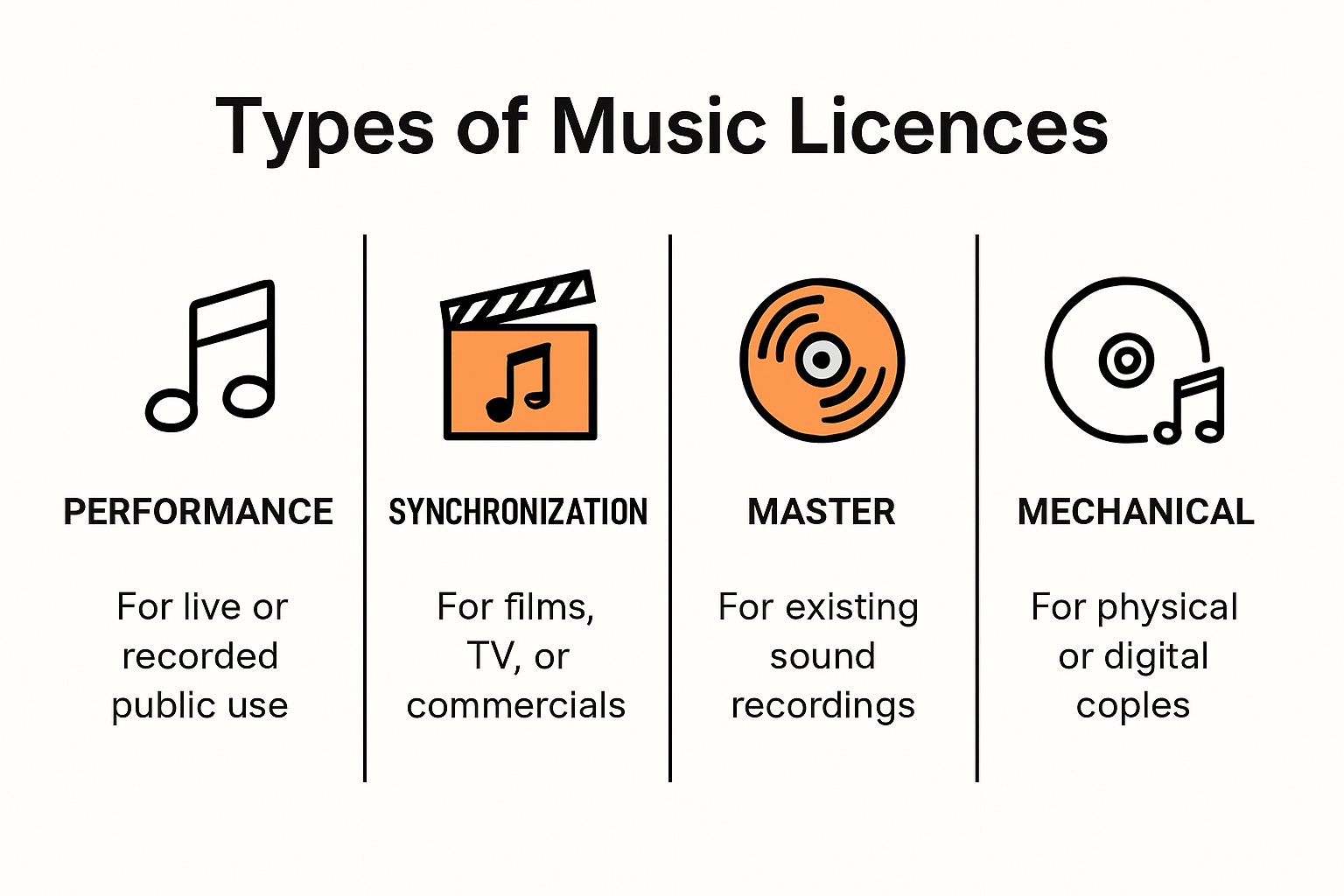
Before exploring each licence in detail, here’s a table comparing the main types of music licences, their uses, and who grants them. This will help you easily distinguish between them and understand when each is needed.
| Licence Type | What It Permits | Typical Use Cases | Permission Granted By |
|---|---|---|---|
| Performance Licence | Public performance of a musical work | Radio, concerts, streaming in venues | Rights owner/PROs |
| Synchronization Licence | Use of composition in visual media | Films, TV, adverts, video games | Copyright holder/composer |
| Master Use Licence | Use of the actual sound recording | When a specific recorded track is needed | Sound recording copyright owner |
| Mechanical Licence | Reproduction/distribution of a musical work | Covers, digital downloads, streaming | Copyright holder/composer |
Performance Licenses: Your Music’s Public Stage
Performance licenses are the backstage pass for your music to be played publicly. Whenever your track gets airtime on the radio, streams through a café’s speakers, or blasts at a live event, a performance license is at work. Learn the intricacies of music licensing to ensure you’re fairly compensated. Performing Rights Organisations (PROs) like PRS and ASCAP act as the middlemen, collecting royalties on behalf of songwriters and publishers. They track performances across various platforms and distribute earnings, making sure artists receive their hard-earned cash.
These licenses cover public performances in multiple settings – from local pubs and restaurants to massive stadium concerts and digital streaming platforms. The scope is broad, ensuring that whether your track is playing in a tiny Leeds pub or on global radio, you’re compensated for your creative work.
Synchronisation and Master Use Licenses: Visual Media’s Musical Heartbeat
Imagine your music soundtrack a gripping film scene or a captivating advertisement. That’s where synchronization (sync) and master use licenses come into play. A sync license permits the use of your musical composition in visual media like films, TV shows, video games, and commercials. The master use license, meanwhile, specifically covers the rights to use your actual sound recording.
These licenses are often the golden ticket for independent artists. A single sync placement can catapult an unknown musician into the spotlight, generating significant revenue and exposure. Film directors, advertisers, and content creators are constantly hunting for unique musical pieces that capture the right emotional tone, making these licenses a potential game-changer for your music career.
Mechanical Licenses: Digital Distribution and Reproduction Rights
In the digital age of 2025, mechanical licenses have become increasingly important. These licenses allow for the reproduction and distribution of musical compositions in digital formats. When someone wants to create a cover version of your song, release it on a streaming platform, or include it in a digital compilation, a mechanical license is required.
The beauty of mechanical licenses lies in their compulsory nature in many jurisdictions. This means that once a musical work has been commercially released, other artists can record their versions by paying a standard fee. This democratises music reproduction and provides additional revenue streams for original composers.
Navigating these licensing types might seem overwhelming, but they’re essential tools in an artist’s professional toolkit. Each license represents an opportunity to protect your work, generate income, and expand your musical reach. Join Music Gateway to simplify your music licensing journey and unlock professional management services that can transform your artistic career.
Remember, in the music industry, knowledge truly is power. Understanding these licenses isn’t just about legal compliance – it’s about taking control of your creative destiny and ensuring your musical talent is both celebrated and compensated.
How Music Licensing Impacts Musicians
Music licensing isn’t just a bureaucratic process – it’s a powerful catalyst that can transform an artist’s career trajectory. In the complex ecosystem of modern music, licensing represents far more than mere legal paperwork; it’s a strategic pathway to financial sustainability, creative recognition, and unprecedented professional opportunities.
To help summarise the primary ways music licensing benefits musicians, see the table below which organises financial, promotional, and professional impacts.
| Impact Area | How Licensing Helps Artists |
|---|---|
| Financial Empowerment | Provides new income streams; royalties from sync, performance, and mechanical licences |
| Artistic Visibility | Expands audience reach via media placements; generates exposure in films, TV, and adverts |
| Networking & Industry Access | Attracts music supervisors, labels, brands; builds professional credibility and connections |
| Digital Rights Management | Educates about rights, helps artists monitor use, and defends against unauthorised exploitation |
| Long-term Career Sustainability | Funds future projects; enables more music creation and professional growth |
Financial Empowerment Through Creative Rights
For independent musicians, music licensing can be the difference between struggling to make ends meet and generating a meaningful income from their art. Each licensed track becomes a potential revenue stream, offering compensation beyond traditional performance and streaming models. Discover strategies for maximizing your music’s earning potential and turning your creative passion into a sustainable career.
Beyond direct financial gains, licensing opens doors to diverse income opportunities. A single sync placement in a film, television show, or advertisement can generate substantial royalties. These unexpected windfalls can fund recording projects, support touring expenses, or provide breathing room for artistic experimentation. Imagine your track soundtracking a pivotal scene in a blockbuster movie – that’s not just exposure, but a potential career-defining moment.
Expanding Artistic Visibility and Professional Networks
Music licensing serves as a powerful promotional tool, introducing artists to audiences who might never have discovered their work through conventional channels. When your music is licensed for visual media, you’re essentially gaining free marketing across potentially global platforms. A television series, video game, or international advertisement can expose your music to millions, creating fan bases in unexpected markets.
Moreover, successful licensing can attract the attention of industry professionals. Music supervisors, record labels, and brand representatives actively scout for unique musical talents through licensing platforms. Each licensed track becomes a calling card, demonstrating your artistic versatility and professional credibility. It’s like having a musical business card that speaks volumes about your creative capabilities.
Navigating the Digital Landscape of Music Rights
In 2025, music licensing has evolved into a complex digital ecosystem. Streaming platforms, social media, and global content creation have dramatically transformed how music rights are managed and monetised. Independent artists must now be savvy not just as musicians, but as entrepreneurs who understand the intricacies of intellectual property.
The digital age demands a proactive approach to music licensing. Artists need to be vigilant about protecting their creative works while simultaneously seeking innovative licensing opportunities. This means understanding copyright laws, tracking potential infringements, and strategically positioning your music for maximum exposure and financial return.
The landscape isn’t just about protection – it’s about creating a sustainable musical ecosystem where artists are fairly compensated for their creativity. Music licensing represents a critical mechanism for ensuring that musicians can continue creating art without compromising their financial stability.
Remember, in the modern music industry, your songs are more than just artistic expressions – they’re valuable assets with the potential to generate ongoing revenue and recognition. Join Music Gateway and transform your approach to music licensing, turning your musical dreams into a professional reality.
Ultimately, music licensing is about empowerment. It’s a testament to the value of creativity, a mechanism for artistic recognition, and a pathway to turning your passion into a sustainable career. Embrace it, understand it, and let it work for you.
Steps To License Your Music As An Artist
Licensing your music is like creating a strategic roadmap for your artistic career. It’s not just about protecting your creative work, but about transforming your musical talent into a sustainable professional venture. In 2025, the music licensing landscape offers unprecedented opportunities for independent artists willing to navigate its intricate terrain.
Preparing Your Musical Portfolio
Before diving into licensing, you need a meticulously organised musical portfolio that showcases your best work. Learn the art of music licensing preparation by ensuring you have high-quality, professionally recorded tracks with clear ownership documentation. This means having pristine master recordings, documented songwriting credits, and well-maintained metadata that identifies you as the copyright holder.
Start by cataloguing your musical works comprehensively. Create a detailed spreadsheet tracking each composition’s unique attributes: genre, mood, potential use cases, and any previous performances or placements. Professional music licensing platforms appreciate artists who present their work systematically, making it easier for music supervisors and potential licensees to discover and utilize your tracks.
Navigating Licensing Platforms and Rights Management
In the digital ecosystem of 2025, multiple platforms exist to help artists license their music. Performance Rights Organisations (PROs) like PRS and ASCAP remain crucial, but emerging digital marketplaces have dramatically simplified the licensing process. These platforms allow you to upload your music, set licensing terms, and connect directly with potential users.
Understand the different licensing types you can offer. Synchronization licenses for visual media, mechanical licenses for reproduction, and performance licenses each represent unique revenue streams. Some platforms specialise in specific licensing types, so research thoroughly to find the best fit for your musical style and career goals.
Building a Strategic Licensing Approach
Successful music licensing isn’t about passive waiting – it’s an active, strategic process. Network with music supervisors, attend industry events, and create targeted pitch packages that highlight your musical versatility. Consider the specific needs of different media sectors: film soundtracks require different musical approaches compared to advertising or video game soundtracks.
Protect your intellectual property rigorously. Register your works with copyright offices and maintain meticulous records of every licensing agreement. In the digital age, tracking and enforcing your rights is as important as creating the music itself. Consider working with a music lawyer or licensing consultant who can help you navigate the complex legal terrain and negotiate favourable terms.
Remember that licensing is about more than immediate financial gain. Each licensed track is an opportunity to expand your artistic reach, build professional relationships, and potentially open doors to larger career opportunities. A single successful placement can introduce your music to millions of potential fans and industry professionals.
The music licensing journey requires patience, persistence, and professionalism. Treat your music as a valuable asset, invest time in understanding the licensing ecosystem, and remain open to diverse opportunities. Join Music Gateway to access professional tools and resources that can transform your approach to music licensing.
Ultimately, successful music licensing is about presenting your artistic vision strategically. It’s a delicate balance of creative passion and professional pragmatism – a dance between artistic integrity and commercial viability. Embrace the process, stay informed, and let your music find its unique path in the world.

Frequently Asked Questions
What is music licensing?
Music licensing is a legal agreement that grants permission to use a specific musical composition or sound recording under defined conditions, ensuring that artists are compensated for their creative works.
What are the different types of music licenses?
The main types of music licenses include performance licenses, synchronization licenses, master use licenses, and mechanical licenses, each with specific uses and permissions related to public performance, visual media, sound recordings, and reproduction rights.
How can I start licensing my music as an artist?
To start licensing your music, prepare a professional musical portfolio, navigate relevant licensing platforms, and build a strategic licensing approach that includes networking and protecting your intellectual property.
Why is music licensing important for independent musicians?
Music licensing is crucial for independent musicians as it opens new income streams, expands audience reach, and fosters professional networks, enabling artists to monetise their creations and gain visibility in the industry.
Turn Knowledge Into Opportunity: Get Paid for Your Music Now
You have just learnt how music licensing works and why it is the lifeline for independent artists who want to earn real income while staying in control of their creative work. The article highlighted common roadblocks such as confusing contracts, missing out on licensing income, and struggling to get your music in front of the right audience. These challenges can make the industry feel closed off and intimidating, especially when dealing with terms like sync licensing and intellectual property.
If you are ready to move past these barriers, Music Gateway offers practical solutions so your music reaches wider audiences and unlocks revenue through licensing, playlisting, and promotion. Now is the best time to make your portfolio work for you. Visit Music Gateway and discover how our music promotion services can help you secure placements and income. Do not let your tracks gather dust when you could be building your reputation and earning more. Start your journey today and put your music in the spotlight.
Recommended
- How To License Your Music | Music Gateway
- Music Licensing Terms | Music Gateway
- Music Publishing Explained | Music Gateway
- Music Distribution Agreements | Music Gateway
- How to Get Music on TV: A Guide for Independent Artists
- Essential Music Industry Terminology for Rising Artists
- What is a Music Supervisor? Understanding Their Role
- Understanding Royalties for Songwriters: A Comprehensive Guide
- Understanding Music Licensing Definition for Creators