


Music distribution agreements are the gateway connecting artists to listeners across digital platforms, with contracts defining every step from streaming royalties to ownership rights. Surprisingly, over 60 per cent of independent artists admit they do not fully understand their distribution contracts.
The real eye-opener is that the newest trends for 2025 are flipping the script altogether, with smart agreements, decentralised platforms, and alternative royalty models giving artists more power than ever before.
Table of Contents
- Understanding Music Distribution Agreements
- Essential Clauses Every Artist Needs
- Common Pitfalls And How To Avoid Them
- Latest Trends In Distribution Deals For 2025
Quick Summary
| Takeaway | Explanation |
|---|---|
| Prioritise rights and ownership clearly | Understand what rights you retain in music distribution agreements to maintain control over your work. |
| Scrutinise financial structures and royalties | Examine how revenue will be shared and ensure clarity on payment terms to protect your earnings. |
| Negotiate termination clauses for flexibility | Ensure you have an exit strategy and manageable notice periods in case your distribution needs change. |
| Identify red flags in agreements | Be vigilant about potential predatory terms that may exploit you or limit your future opportunities. |
| Embrace alternative revenue streams | Look for agreements that offer diverse earning opportunities beyond traditional streaming royalties. |
Understanding Music Distribution Agreements
Music distribution agreements represent the critical legal backbone connecting independent artists with global audiences, transforming raw musical creativity into a professionally managed digital product. These contracts are far more than mere paperwork – they’re strategic roadmaps determining how your musical work travels across streaming platforms, digital stores, and international markets.
The Fundamental Architecture of Distribution Contracts
At its core, a music distribution agreement is a legal contract between an artist and a distribution company that outlines how your music will be delivered to digital platforms. Think of it like a magical digital passport that allows your tracks to cross digital borders, reaching listeners from Manchester to Melbourne.
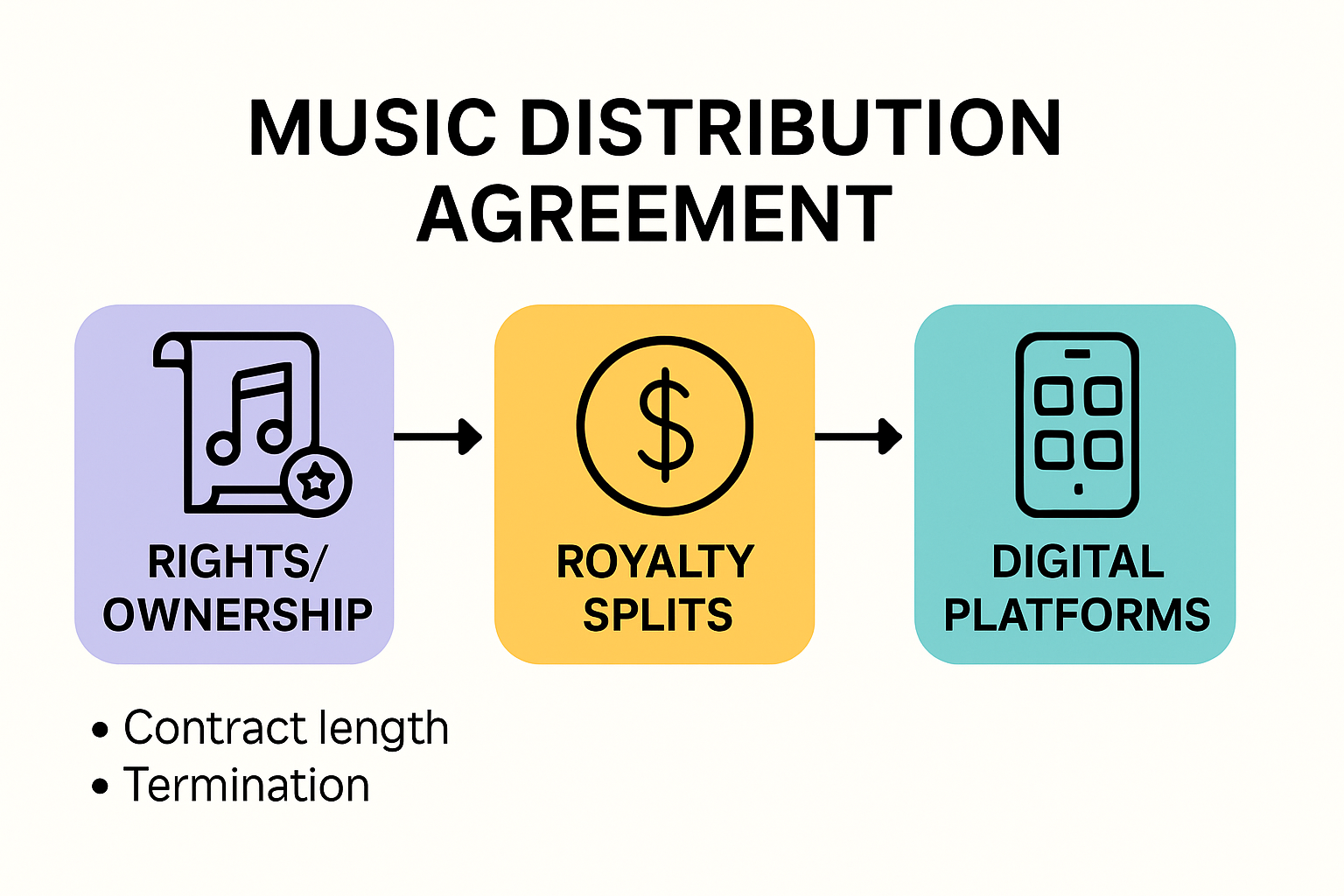
The agreement typically covers several crucial elements. Rights management sits at the heart of these contracts, defining exactly what permissions you’re granting to the distributor. Are they exclusively representing your music? Can they sublicense your tracks? These nuanced details can dramatically impact your artistic control and potential revenue streams.
Royalty structures form another critical component. Most modern distribution agreements operate on a percentage-based model, where the distributor takes a small cut of your streaming or download revenue. This isn’t just about numbers – it’s about creating a mutually beneficial partnership that incentivises both parties to maximise your music’s reach. Our guide on digital music licensing provides deeper insights into these intricate financial arrangements.
Navigating the Legal Landscape
Independent artists must approach distribution agreements with a blend of enthusiasm and strategic caution. While these contracts open tremendous opportunities, they also require scrutiny. Key areas to examine include termination clauses, territorial restrictions, and potential revenue-sharing mechanisms.
A solid distribution agreement will clearly outline:
- Duration of Contract: How long are you committed to this specific distributor?
- Revenue Share: Precisely how much of your earnings will be retained by the distribution platform?
- Digital Platform Coverage: Which specific streaming services and digital stores will carry your music?
The digital music ecosystem in 2025 demands more sophisticated agreements than ever before. With algorithmic playlisting, global streaming platforms, and increasingly complex rights management, artists need distribution partners who understand the nuanced terrain of modern music consumption.
Remember, a great distribution agreement isn’t just a legal document – it’s a strategic partnership. The right agreement can transform your musical aspirations from bedroom recordings to international recognition. Whether you’re a bedroom producer or an emerging artist, understanding these contracts is your first step towards professional music management.
Ready to take your music distribution seriously? Join Music Gateway and unlock a world of professional music distribution opportunities.
Essential Clauses Every Artist Needs
When diving into music distribution agreements, understanding the essential clauses is like having a secret map through the treacherous terrain of the music industry. Artists need to be sharp-eyed and strategic, treating each contract clause as a potential goldmine or pitfall.
Rights and Ownership: Your Musical DNA
At the heart of any robust distribution agreement lies the critical section on rights and ownership. This isn’t just legal mumbo jumbo – it’s the fundamental framework defining how your musical creation will exist in the digital universe. Intellectual property rights determine who controls your master recordings, publishing rights, and potential future exploitations of your work.
Artists must scrutinise whether the agreement offers an exclusive or non-exclusive distribution arrangement. An exclusive deal means the distributor has sole rights to represent your music, while a non-exclusive agreement allows you to work with multiple platforms simultaneously. Each approach has its pros and cons. Exclusive deals might offer more comprehensive promotional support, but they can also limit your flexibility. Our comprehensive guide on music licensing can help you navigate these nuanced decisions.
Financial Structures: Following the Money Trail
Royalty clauses represent the financial heartbeat of your distribution agreement. These sections outline exactly how you’ll get paid for your musical hustle. Look for crystal-clear definitions of:
- Percentage Splits: How revenue from streaming, downloads, and potential sync licensing will be divided
- Payment Thresholds: Minimum earnings required before payouts are processed
- Accounting Transparency: Frequency and detail of financial reporting
The best agreements provide predictable, transparent financial mechanisms. You want a partner who treats your musical income with respect, not some dodgy bloke trying to shortchange your creative efforts.
Termination and Flexibility: Your Escape Route
No artist wants to be locked into a perpetual contract that feels like musical purgatory. Robust distribution agreements include clear termination clauses that protect your interests. These sections should specify:
- Conditions under which either party can end the agreement
- Notice periods required for contract termination
- What happens to your music catalogue post-termination
- Potential penalties or restrictions on moving your music
The digital music landscape of 2025 demands flexibility. Artists need distribution partners who understand that musical careers are dynamic, not static entities trapped in amber.
Remember, a distribution agreement isn’t just a piece of paper – it’s a strategic partnership that can make or break your musical journey. Read every word, ask questions, and never be afraid to negotiate terms that serve your artistic vision.
Ready to take control of your musical destiny? Join Music Gateway and unlock professional distribution opportunities that respect your creative autonomy.
Below is a table summarising the key clauses and what artists should look out for in each when reviewing a music distribution agreement.
| Clause | What It Covers | What to Look For |
|---|---|---|
| Rights & Ownership | Control over master recordings, publishing, IP rights | Exclusive vs non-exclusive, clear definition of ownership |
| Royalty Structure | How revenue from streams/downloads/sync is split | Transparent percentage splits, clarity in calculations |
| Payment Thresholds | Minimum amount needed before payouts occur | Reasonable thresholds, regular payment intervals |
| Termination | How and when the agreement can end | Fair notice periods, minimal post-termination restrictions |
| Platform Coverage | Which digital/streaming services does your music get distributed to | Broad reach or targeted platforms as desired |
| Accounting Transparency | How and when you get paid and see reports | Frequent detailed reporting, easy access to payment data |
| Additional Fees | Any extra charges by the distributor | Avoid hidden or vague fees |
Common Pitfalls and How to Avoid Them
The music distribution landscape is riddled with potential landmines that can transform your musical dreams into a contractual nightmare faster than you can say “record deal”. Understanding these common pitfalls isn’t just smart – it’s survival in the cutthroat world of music distribution.
The Red Flags: Spotting Predatory Agreements
Not all distribution agreements are created equal. Some contracts are designed to benefit the distributor at the artist’s expense, turning your musical passion into someone else’s profit machine. Warning signs include overly complex language, vague royalty structures, and terms that seem more like a legal labyrinth than a transparent partnership.
Beware of agreements that demand excessive upfront fees or lock you into unreasonably long commitments. These are often red flags signalling a distributor more interested in extracting money from artists than genuinely supporting their musical journey. Check out our detailed guide on music licensing to understand what fair agreements should look like.
Key indicators of a potentially problematic distribution agreement include:
- Unexplained administrative fees
- Mandatory additional service purchases
- Restrictive clauses limiting your future musical opportunities
- Ambiguous revenue-sharing mechanisms
Financial Traps: Protecting Your Musical Revenue
Money makes the music world go round, but distribution agreements can turn your potential earnings into a complex mathematical puzzle. Artists often fall into financial traps by not fully understanding revenue streams and payment structures.
The most common financial pitfalls include:
- Hidden Deductions: Some distributors sneak in administrative costs that dramatically reduce your actual earnings
- Unclear Royalty Calculations: Complicated formulas that make tracking your income nearly impossible
- Delayed Payment Schedules: Agreements with extended payment windows that leave you waiting months for your hard-earned revenue
Professional artists treat their music like a business. This means scrutinising every financial clause, understanding exactly how and when you’ll be compensated, and not being afraid to negotiate terms that protect your interests.
Legal Landmines: Protecting Your Artistic Autonomy
Legal complexity can transform a seemingly straightforward distribution agreement into a potential career-limiting contract. Artists must be vigilant about clauses that could inadvertently strip away their creative control or future opportunities.
Watch out for agreements that:
- Demand exclusive rights across unreasonably long periods
- Limit your ability to distribute music through other platforms
- Include broad rights assignments that compromise your artistic independence
The digital music ecosystem of 2025 demands flexibility. Your distribution agreement should be a partnership, not a straitjacket. Always consult with a music industry lawyer who understands the nuanced landscape of digital distribution.
Remember, a great distribution agreement empowers your musical journey. It shouldn’t feel like you’re signing away your artistic soul. Read carefully, ask questions, and never be afraid to walk away from a deal that doesn’t truly serve your creative vision.
Ready to navigate the complex world of music distribution with confidence? Join Music Gateway and unlock professional distribution opportunities that respect your artistic integrity.
The following table provides a checklist of common red flags and pitfalls for artists to watch for in music distribution agreements.
| Potential Pitfall | Description | Artist’s Action |
|---|---|---|
| Unexplained Administrative Fees | Hidden charges that reduce your actual earnings | Ask for fee breakdowns |
| Mandatory Extra Purchases | The distributor holds unnecessary exclusive control | Decline unnecessary extras |
| Restrictive Long Commitments | Contracts that lock you in for extended periods | Negotiate shorter terms |
| Vague or Ambiguous Royalty Terms | Unclear definitions of how earnings are calculated | Demand transparency |
| Delayed Payment Schedules | Long wait times for receiving payout of royalties | Set clear payment timelines |
| Broad Exclusive Rights | Long wait times for receiving the payout of royalties | Limit scope and duration |
| Lack of Accounting Transparency | Difficulty obtaining earning reports and statements | Require regular reporting |
Latest Trends in Distribution Deals for 2025

The music distribution landscape of 2025 is a dynamic ecosystem where technology, artist autonomy, and innovative revenue models are reshaping how musicians connect with global audiences. Gone are the days of rigid, one-size-fits-all distribution agreements – welcome to an era of flexibility, transparency, and unprecedented creative control.
The Rise of Decentralised Distribution Platforms
Independent artists are experiencing a revolution in distribution strategies. Digital platforms are increasingly offering more nuanced, artist-friendly agreements that prioritise flexibility over restrictive long-term contracts. Blockchain technology and decentralised platforms are emerging as game-changers, providing artists with unprecedented transparency in royalty tracking and direct monetisation routes.
The most progressive distribution models now offer granular control over how and where music is distributed. Artists can select specific territories, negotiate real-time revenue sharing, and maintain greater intellectual property rights. Explore our comprehensive guide on modern music licensing to understand these transformative shifts.
Alternative Revenue Streams and Royalty Models
Traditional streaming royalties are no longer the sole financial lifeline for musicians. Innovative distribution agreements in 2025 are incorporating multiple revenue streams that extend far beyond traditional digital platforms. These might include:
- Sync Licensing Opportunities: Direct pathways to film, TV, and gaming music placements
- Algorithmic Playlist Monetisation: Revenue shares from curated and algorithmic playlist inclusions
- Fan Engagement Monetisation: Direct fan support models integrated into distribution platforms
The most forward-thinking distribution agreements now treat artists as comprehensive content creators, not just music producers. This holistic approach recognises that modern musicians operate across multiple digital ecosystems, requiring flexible, multi-channel revenue strategies.
Technology-Driven Personalisation and Global Reach
Advanced data analytics are transforming distribution agreements from static contracts into dynamic, intelligent partnerships. Machine learning algorithms now help artists understand global audience segments, recommend optimal release strategies, and provide real-time insights into music performance.
Distribution platforms are no longer just digital warehouses for music – they’re intelligent ecosystems that offer predictive analytics, targeted promotional support, and personalised marketing strategies. Artists can now access unprecedented insights about their global audience, helping them make more informed decisions about their musical careers.
The distribution landscape of 2025 is defined by one crucial principle: artist empowerment. Musicians are no longer passive participants in a complex industry ecosystem but active, informed creators who can strategically navigate their musical journey.
Remember, a great distribution agreement in 2025 isn’t just about getting your music online – it’s about creating a comprehensive strategy that supports your entire artistic ecosystem. Read carefully, ask questions, and choose partners who genuinely understand the modern musical landscape.

Frequently Asked Questions
What is a music distribution agreement?
A music distribution agreement is a legal contract between an artist and a distribution company that outlines how the artist’s music will be delivered to digital platforms, detailing aspects such as rights management, royalty structures, and the extent of promotional support.
What key clauses should I look for in a distribution agreement?
Important clauses include rights and ownership, financial structures (including royalty calculations), termination and flexibility, platform coverage, and accounting transparency. Each clause can significantly affect an artist’s control and revenue.
What are the common pitfalls to avoid in music distribution agreements?
Common pitfalls include hidden administrative fees, vague or ambiguous royalty terms, excessive contractual restrictions, and long-term commitments. Artists should read agreements carefully and negotiate terms that protect their interests.
What trends are shaping music distribution agreements in 2025?
Key trends include the rise of decentralised distribution platforms, alternative revenue streams beyond traditional streaming, and technology-driven personalisation. These changes are empowering artists, allowing greater control and flexibility in their distribution strategies.
Take Control of Your Music Career with Transparent Distribution Agreements
Feeling overwhelmed by confusing music distribution agreements and unclear royalty terms? The article highlighted how complex contracts, hidden fees and lack of control can turn your creative journey into a source of stress rather than success. Too many independent artists are caught out by restrictive rights clauses and financial traps that limit their earnings and flexibility. If you want a team in your corner that truly understands industry challenges, you do not have to navigate this alone.
Music Gateway is your partner for artist-first distribution, promotion and licensing. Gain access to transparent contracts, fair royalty structures and a network that is committed to your growth. Discover how you can protect your rights, boost your music across global platforms and avoid the pitfalls covered in the article. Visit our music promotion hub to explore success stories and industry insights, or start your journey right now at https://musicgateway.com/music-promotion. Put yourself in control of your music and your future today.
Recommended
- Music Licensing Terms | Music Gateway
- Music Distribution vs Publishing | Music Gateway
- Music Publishing Explained | Music Gateway
- How To Sell Music | Мusic Gateway
- How Music Distribution Works: A Clear Guide for Artists
- Music Business Models: Guide for Artists and Labels
- Understanding Music Industry Trends 2025 for Artists