

The music industry is poised for a major shakeup in 2025, making it an exciting time for artists and professionals alike. You might assume that making a living as a musician means endless financial struggle, but things have changed.
Over 70 per cent of artist revenue now comes from digital platforms and licensing, flipping old assumptions on their head. What really matters now is knowing how this new system works and using it to your advantage.
Table of Contents
- Key Roles In The Music Industry
- How Money Flows In Music
- Essential Legal And Copyright Basics
- Building Success As An Independent Artist
Quick Summary
| Takeaway | Explanation |
|---|---|
| Understand key industry roles | Recognising the roles of creative, business, and technical professionals helps artists build effective networks. |
| Diversify revenue streams | Utilise social media and streaming platforms for targeted marketing to expand your reach and connect with fans effectively. |
| Master legal rights and protections | Knowledge of copyright and licensing is essential for protecting your music and avoiding legal disputes. |
| Build a distinctive artist brand | Develop a compelling narrative and visual identity that resonates with your audience to foster engagement and loyalty. |
| Leverage digital marketing | Utilize social media and streaming platforms for targeted marketing to expand your reach and connect with fans effectively. |
Key Roles in the Music Industry
The music industry operates like a complex ecosystem where multiple professionals collaborate to transform raw musical talent into global success. Understanding these key roles is crucial for artists who want to navigate this intricate world effectively. Whether you’re a budding musician or an aspiring industry professional, knowing who does what can help you build strategic relationships and make informed career decisions.
Creative and Performance Professionals
At the heart of the music industry are the creative professionals who generate the actual musical content. Musicians, singers, and songwriters are the foundational creators who craft the sonic experiences that captivate audiences. These individuals aren’t just talented performers; they’re storytellers who translate emotions into melodies and lyrics.
Producers play a pivotal role in shaping musical output. They work closely with artists to refine sound, arrange tracks, and create the sonic landscape that transforms a good song into a potential chart-topper. A brilliant producer can elevate an artist’s work from decent to extraordinary, using technical skills and creative vision to highlight an artist’s unique strengths.
Session musicians and session vocalists are the unsung heroes who bring professional polish to recordings. These skilled professionals are hired to perform specific parts, adding depth and professional quality to tracks across various genres. Their technical expertise and ability to quickly adapt to different musical styles make them invaluable in studio environments.
Business and Management Roles
Behind every successful musical act is a team of business professionals who manage careers, negotiate contracts, and create strategic pathways to success. Artist managers are particularly critical, serving as strategic partners who guide musicians through complex industry landscapes. They handle everything from booking performances to coordinating music promotion strategies.
Booking agents specialise in securing performance opportunities, negotiating performance fees, and building touring schedules. They act as intermediaries between artists and venues, ensuring musicians have consistent work and fair compensation. A skilled booking agent can transform an emerging artist’s visibility and income potential.
Music lawyers and entertainment attorneys are essential for protecting artists’ legal interests. They draft and review contracts, manage intellectual property rights, and provide crucial guidance on complex legal matters. Their expertise helps musicians avoid potential pitfalls and ensures fair treatment in business negotiations.
Technical and Support Roles
Sound engineers, mixing engineers, and mastering professionals are the technical wizards who transform raw recordings into polished musical experiences. Sound engineers manage audio recording processes, ensuring optimal sound quality during live and studio performances. Mixing engineers blend individual track elements to create cohesive, balanced soundscapes, while mastering engineers apply final technical refinements that prepare tracks for professional distribution.
Marketing and PR professionals play a crucial role in building artist brands and connecting musicians with broader audiences. They develop promotional strategies, manage social media presence, and create narrative frameworks that help artists stand out in crowded markets. Their work involves understanding audience demographics, crafting compelling storytelling, and leveraging various media channels.
The music industry is a dynamic, collaborative environment where success depends on talented individuals working together. By understanding these key roles, artists can build stronger networks, make more informed decisions, and create pathways towards sustainable musical careers.
Ready to take your music career to the next level? Join Music Gateway and connect with industry professionals who can help transform your musical dreams into reality.
To help visualise the main types of roles within the music industry and their primary responsibilities, see the following table:
| Role Category | Example Roles | Main Responsibilities |
|---|---|---|
| Creative & Performance | Musicians, Singers, Songwriters, Producers | Create, perform, compose, and produce music |
| Business & Management | Artist Managers, Booking Agents, Music Lawyers | Career management, bookings, contract negotiation |
| Technical & Support | Sound/Mixing/Mastering Engineers, PR, Marketing | Audio production, promotion, branding |
| Session Work | Session Musicians, Vocalists | Provide professional performances for recordings |
How Money Flows in Music
The music industry’s financial ecosystem is a complex network of revenue streams that can feel like a labyrinthine puzzle for emerging artists. Understanding how money moves through this intricate system is crucial for musicians who want to transform their creative passion into a sustainable career.
Primary Revenue Streams
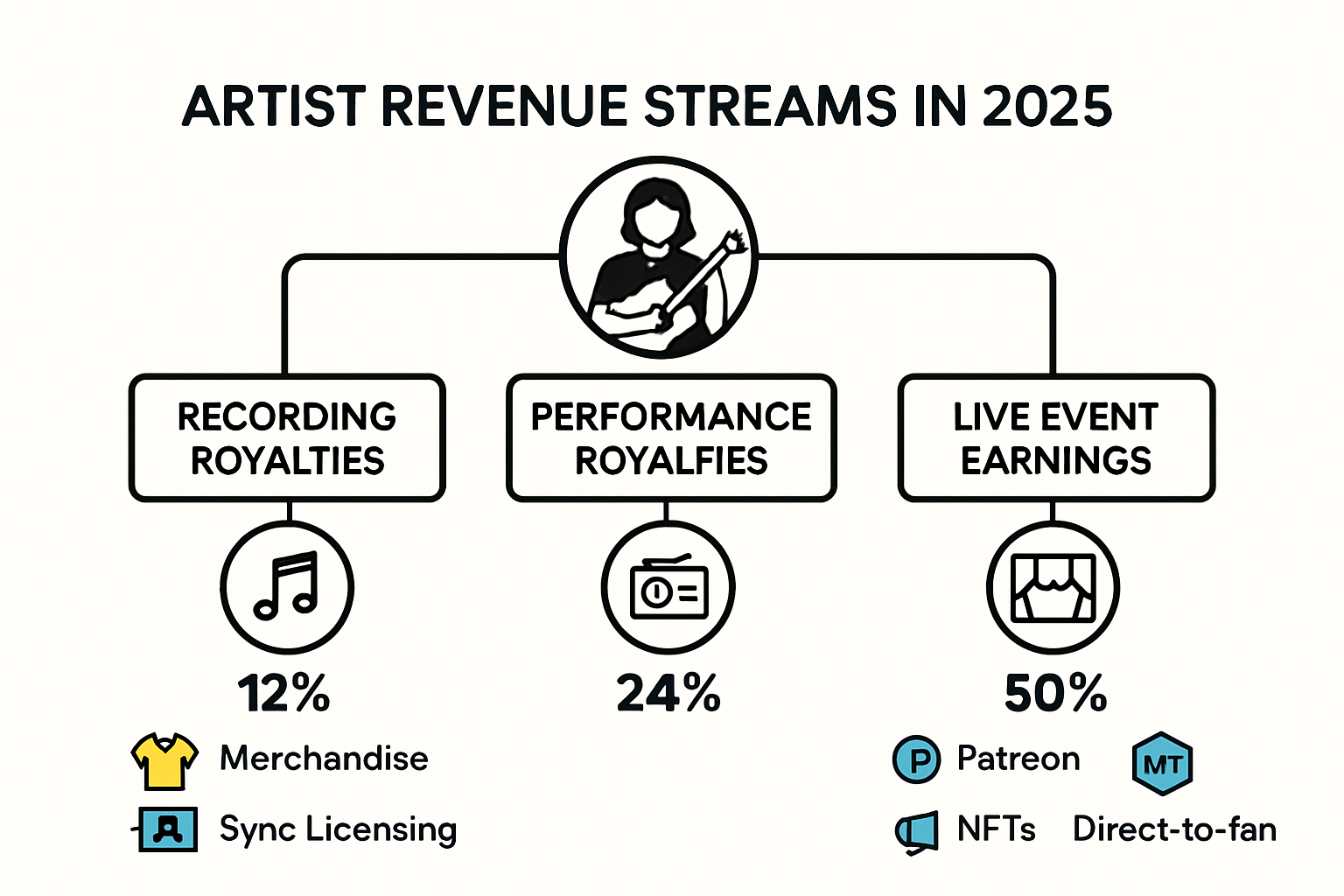
Recording royalties represent the foundational income for most musicians. These payments come from physical album sales, digital downloads, and streaming platforms. Streaming has dramatically transformed how artists earn money, with platforms like Spotify and Apple Music paying artists per stream. However, the per-stream rates are notoriously low, meaning artists need substantial listener numbers to generate meaningful income.
Performance royalties offer another critical revenue channel. When your music is played on the radio, performed live, or broadcast in public spaces, you’re entitled to compensation. Performance rights organisations like PRS track these plays and distribute royalties to songwriters and publishers. Learn more about music distribution strategies that can help maximise these earnings.
Live performances remain a significant income source for many musicians. Concert ticket sales, merchandise, and performance fees can provide substantial financial returns. Emerging artists often find that live shows not only generate direct revenue but also build fan bases and create opportunities for future collaborations and sponsorships.
Licensing and Sync Revenue
Music licensing represents a potentially lucrative but often overlooked revenue stream. Sync licensing involves placing music in films, television shows, advertisements, and video games. A single successful sync placement can generate thousands of pounds, providing artists with immediate financial benefits and exposure to broader audiences.
Publishing royalties are another critical income source for songwriters. When a song is written, recorded, or performed, the songwriter receives payments based on the composition’s usage. This differs from recording royalties, which are paid to performers and record labels. Savvy musicians understand the importance of registering their compositions with publishing organisations to ensure they receive all potential earnings.
Emerging Digital Revenue Models
The digital era has introduced innovative monetisation strategies for musicians. Platforms like Patreon allow fans to support artists directly through monthly subscriptions, providing a more stable income stream. Social media platforms and streaming services now offer direct monetisation options, enabling artists to earn from their online content and engagement.
Non-fungible tokens (NFTs) and blockchain technologies are creating new revenue possibilities for musicians. These technologies allow artists to sell unique digital assets, offering fans direct ownership of exclusive content and providing musicians with alternative income channels.
Navigating the music industry’s financial landscape requires strategic thinking and a comprehensive understanding of these revenue streams. Artists who diversify their income sources and understand the nuanced ways money flows through the industry are better positioned to build sustainable musical careers.
Ready to take control of your music career and unlock new revenue opportunities? Join Music Gateway and connect with professionals who can help you maximise your musical potential.
The following table summarises the major revenue streams available to artists in the music industry and the source of each type of earnings:
| Revenue Stream | Source/Platform | Who Receives Income | Notes |
|---|---|---|---|
| Recording Royalties | Album sales, streaming | Artists/Labels | Streaming requires large plays for meaningful income |
| Performance Royalties | Radio, live, public performance | Songwriters/Publishers | Collected/distributed by performance rights organisations |
| Live Performances | Concerts, shows, merchandise | Artists | Direct ticket and merchandise sales boost fan engagement |
| Sync Licensing | TV, film, ads, video games | Artists/Songwriters | One placement can yield significant one-off payments |
| Publishing Royalties | Song registrations, covers | Songwriters/Publishers | Paid for usage of composition, separate to recording royalties |
| Digital Monetisation | Patreon, social media, NFTs | Artists | Direct fan support and new digital asset sales |
Essential Legal and Copyright Basics

The music industry’s legal landscape is a minefield of potential pitfalls that can transform a promising musical career into a bureaucratic nightmare if you’re not properly informed. Understanding copyright fundamentals and legal protections is not just recommended, it’s crucial for any serious musician looking to safeguard their creative work.
Copyright Fundamentals
Copyright represents the legal protection that ensures musicians can control how their original musical works are used and monetised. When you create an original piece of music, you automatically receive certain rights that prevent others from reproducing, distributing, or profiting from your work without permission. This protection covers both the musical composition (the notes and lyrics) and the sound recording itself.
Registering your copyright provides additional legal protection and creates a public record of your ownership. While copyright is technically established the moment you create an original work, formal registration with official bodies like the UK Copyright Service offers stronger legal standing in potential disputes. Learn more about protecting your music’s legal rights to ensure comprehensive protection for your creative output.
Musicians need to understand the difference between composition copyright and sound recording copyright. Composition copyright protects the underlying musical structure, musical notes, lyrics, and arrangement. Sound recording copyright covers the specific recorded version of that composition. This means a single song can have multiple copyright layers, each with its own legal considerations.
Licensing and Usage Rights
Music licensing represents a complex but potentially lucrative aspect of music law. Several types of licenses determine how your music can be used. Mechanical licenses cover the reproduction of your music, performance licenses govern live and broadcast performances, and sync licenses allow your music to be used in visual media like films, advertisements, and video games.
Publishing rights are another critical legal consideration. When you sign with a publishing company, you’re essentially agreeing to share the copyright and potential earnings from your musical compositions. These agreements can be intricate, with varying percentages of ownership and different terms for different types of usage. Always consult with a music lawyer before signing any publishing contract to understand the full implications.
Protecting Your Intellectual Property
Intellectual property protection goes beyond simple copyright registration. Musicians need to be proactive about monitoring and enforcing their rights. This might involve tracking unauthorised use of your music, sending cease and desist letters, or pursuing legal action against those who infringe on your creative work.
Collective rights organisations play a crucial role in protecting musicians’ interests. Organisations like PRS for Music in the UK help track and collect royalties, provide legal support, and ensure artists receive fair compensation for their work. Joining such organisations can provide additional layers of legal protection and support.
The digital age has complicated intellectual property law, with streaming platforms, social media, and global distribution creating new challenges and opportunities. Musicians must stay informed about evolving legal standards and be prepared to adapt their strategies for protecting their creative work.
Understanding these legal basics is not about becoming a legal expert; it’s about protecting your art and ensuring you can focus on what you do best: creating incredible music. Knowledge is power, and in the music industry, legal knowledge can be the difference between a thriving career and a potential disaster.
Building Success as an Independent Artist
The modern music landscape offers unprecedented opportunities for independent artists to carve their path, break traditional industry barriers, and build successful careers on their terms. Gone are the days when major record labels were the sole gatekeepers of musical success. Today, talented musicians can leverage digital platforms, strategic marketing, and direct fan engagement to create sustainable careers.
Developing Your Unique Artist Brand
Building a compelling artist brand goes far beyond creating great music. It’s about crafting a distinctive narrative that resonates with your target audience. Your brand encompasses your musical style, visual aesthetic, personal story, and the values you represent. This means thoughtfully curating your social media presence, developing a consistent visual identity, and communicating authentically with your fans.
Social media platforms are powerful tools for independent artists to showcase their personality and connect directly with listeners. Instagram, TikTok, and YouTube allow musicians to share behind-the-scenes content, musical snippets, and personal insights that help fans feel genuinely connected to their artistic journey. Explore comprehensive independent artist marketing strategies to amplify your online presence and build a loyal fan base.
Consistent content creation is key to maintaining audience engagement. This doesn’t mean overwhelming your followers with constant posts, but rather sharing high-quality, meaningful content that provides genuine value and insight into your musical world.
Strategic Digital Marketing and Networking
Digital marketing has transformed how independent artists can reach global audiences. Streaming platforms like Spotify offer playlist placement opportunities, while targeted social media advertising allows precise audience targeting. Understanding algorithms, using analytics, and creating shareable content can significantly expand your reach without massive marketing budgets.
Networking remains crucial in the music industry. This involves connecting with other musicians, producers, playlist curators, and industry professionals through online communities, music conferences, and collaborative projects. Collaboration can open doors to new audiences and provide valuable learning experiences.
Email marketing and fan community building offer direct channels to maintain relationships with your most dedicated listeners. Creating exclusive content, offering early access to music, and providing personalised experiences can transform casual listeners into passionate supporters who actively promote your music.
Financial and Career Management
Successful independent artists treat their music career like a business. This means developing multiple revenue streams beyond music sales, such as merchandise, live streaming performances, sync licensing, and crowdfunding platforms. Diversifying income sources provides financial stability and reduces dependence on any single revenue channel.
Continuous skill development is paramount. This includes not just musical abilities, but also understanding digital marketing, basic financial management, and music production technologies. Online courses, workshops, and industry resources can help independent artists develop the comprehensive skill set needed to thrive.
Mental resilience is perhaps the most critical yet overlooked aspect of an independent music career. The journey involves constant rejection, algorithm changes, and unpredictable market dynamics. Developing a growth mindset, maintaining emotional balance, and celebrating small victories can help artists navigate the inevitable challenges.

The independent music path is not about overnight success, but consistent effort, strategic thinking, and genuine connection with your audience. By embracing digital tools, maintaining artistic integrity, and continuously learning, independent artists can create meaningful careers on their terms.
Ready to take your independent music career to the next level? Join Music Gateway and unlock professional resources designed to support your musical journey.
Frequently Asked Questions
What are the primary revenue streams for musicians in 2025?
The primary revenue streams for musicians include recording royalties from album sales and streaming, performance royalties from live shows and radio play, and licensing fees for use in film and advertisements. Diversifying income sources is crucial for financial stability.
How can independent artists build a distinctive brand?
Independent artists can build a distinctive brand by developing a unique narrative, consistent visual identity, and authentic social media presence. Engaging directly with fans and sharing behind-the-scenes content helps create a strong connection with the audience.
Why is understanding copyright important for musicians?
Understanding copyright is essential for musicians to protect their original works from unauthorised use and ensure they receive fair compensation for their music. Copyright registration strengthens legal standing in potential disputes over ownership and usage rights.
What roles do business and management professionals play in the music industry?
Business and management professionals, such as artist managers and booking agents, support musicians by handling contracts, negotiating performances, and strategising career paths. They play a vital role in navigating the complex music industry landscape.
Move from Music Basics to Industry Breakthroughs with Music Gateway
You have just learned how the music industry in 2025 is evolving, making digital platforms, sync licensing, and brand development essential for independent artists. The challenge many musicians face is turning this knowledge into real career growth. Complexities like managing royalties, organising smart promotion, and protecting your copyright can leave you feeling lost or overwhelmed, especially without inside connections or major label backing.
Music Gateway bridges this gap by offering a direct route to the solutions you need. Access powerful music promotion services, secure sync licensing deals, and simplify your journey with transparent support designed for independent creators like you. Our platform allows you to distribute your music, submit for playlist placement, and boost your visibility without the traditional barriers. Now is the moment to professionally advance your career.
Discover how our music promotion strategies can unlock new opportunities for your sound. Start turning your industry knowledge into real-world results today.