

Right, listen up, you beautiful disasters – you need help with some juicy music marketing strategy ideas. If you’re reading this, chances are you’ve crafted some bloody brilliant tunes but are now facing the soul-crushing reality that the world isn’t exactly beating down your door. Welcome to the glamorous life of being an indie artist – where talent and a fiver might just get you a pint and some crisps in London (if you’re lucky).
In this notoriously fickle industry, making great music is only half the battle – and sometimes not even the most important half. Your music marketing strategy needs to be as creative as that experimental jazz-fusion track you wrote at 3 AM after too many espresso martinis. As countless musicians have discovered while crying into their Pot Noodles, it’s not always the best songs that rise to the top, but rather those pushed by someone who knows what they’re bloody doing.
Quick question – releasing music soon? Check out our Music Distribution and Music Promotion services.
Before You Launch Your Marketing Assault
Know Who You Are (No, Really)
Before you start plastering your lovely mug all over various social media platforms, take a moment to figure out who the bloody hell you actually are as an artist. This means having a proper sit-down with yourself, preferably with a strong cuppa (or something significantly stronger – we don’t judge).
Are you the next punk messiah? A bedroom producer with ambient dreams? That acoustic singer-songwriter your local open mic can’t get enough of? The most effective marketing efforts succeed because they’re authentic – if you’re putting on an act, fans will smell that fakery from a mile off. And trust me, nothing clears a room faster than the whiff of a desperate poser trying to be the next Ed Sheeran when they’re clearly more of a Radiohead.
Make Music That Doesn’t Make Ears Bleed
Even with a digital marketing budget that would make major labels weep with envy, if your music is absolute rubbish, it probably won’t work. There are countless examples of massive stars with endless resources whose latest releases have tanked spectacularly. The usual culprit? The public simply didn’t fancy the music. Turns out you can’t actually polish a turd, no matter how much Auto-Tune you chuck at it.
Before spending a single penny to promote music, make sure your tracks aren’t complete tosh. Once you’re confident your tunes could survive a critical listening session down the pub, proper Music Distribution will ensure they sound professional when they hit streaming platforms.
12 Music Marketing Techniques That Won’t Break the Bank
1. Build a Proper Social Media Presence Without Looking Like a Desperate Try-Hard
In this business, relationships aren’t just important – they’re everything. They can make or break careers faster than you can say “musical differences due to creative visioning.” Dedicate time to forging genuine bonds with tastemakers and folks who might actually help get your music on streaming platforms.
Start with smaller blogs and media outlets that focus on your genre. You’ll have a better chance of getting responses from these writers than from the big publications where your carefully crafted email will likely join thousands of others in the digital bin, right next to the “great opportunity for exposure” offers.
While traditional media still matters, streaming platforms and your YouTube channel are where millions now discover music. Find the curators making playlists in your genre and build relationships before you need favors. One excellent feature can make all the difference between obscurity and “who’s that new band everyone’s talking about before they become too mainstream?”
2. Music Videos: Create Something Memorable Without Remortgaging Your Nan’s House
Nothing screams “take me seriously” quite like a decent music video. The good news? You don’t need to sell a kidney to make one anymore.
“But I don’t have the budget for a Michael Bay production!” I hear you cry. Well, neither did OK Go when they made their treadmill video, and that worked out alright for them, didn’t it? A creative concept beats production value every time. Some of the most viral videos cost next to nothing but had a brilliant idea behind them.
Find that mate who’s always banging on about their film degree and put them to work. Just avoid those clichéd band-playing-in-a-warehouse shots unless you’re being deeply ironic about it. We’ve all seen enough moody silhouettes against industrial backgrounds to last several lifetimes, thank you very much.
3. Setting Up a Proper YouTube Channel (Not Just a Sad Collection of Videos)
Your YouTube channel isn’t just a place to dump your music videos – it’s potentially your most powerful marketing tool. Treat it like the proper media outlet it is.
First off, sort out the basics: a decent channel banner, a profile picture that doesn’t look like it was taken on a Nokia from 2003, and a proper bio that doesn’t just say “we make music lol.” Then think about content – behind-the-scenes footage, acoustic versions, tutorials, or just you having a chat about your influences while drinking tea. Whatever shows your personality.
The algorithm loves consistency more than your ex loved pointing out your flaws, so post regularly. And for the love of all that’s holy, learn the basics of SEO or you’ll be shouting into the void forever. If done right, your YouTube channel can bring in fans, income, and opportunities that your Instagram never will.
4. Create Social Content That Doesn’t Make People Cringe
Success on social media platforms requires following trends while simultaneously doing something original (yes, it’s as contradictory as a vegan at a kebab shop). Whether it’s high quality photos, videos, or text, give your audience something familiar but with your unique twist.
Don’t simply copy what others are doing – nobody needs another identical TikTok dance. Put your own spin on whatever’s trending. If people respond well, you’re on your way to creating a brand that stands out in the endless scroll of mediocrity. For proper advice on getting your content seen by actual human beings, check out comprehensive Music Promotion services that won’t cost you an arm and a leg.
5. Start a Mailing List (Yes, Email Still Exists, Grandad)
Some claim mailing lists are as dead as Britpop, but they remain a fantastic way to reach super fans. These are the lovely people who’ll actually buy your music and merch, not just stream your single once and forget you exist faster than a one-night stand.
Keep it casual and share only what matters – new releases, tour dates, and when your bassist finally gets that embarrassing tattoo removed. Send messages monthly at most, unless something truly spectacular happens (like your drummer staying sober for an entire weekend). Spam your subscribers, and they’ll unsubscribe faster than you can say “we’ve gone in a more experimental direction.”
6. Put On Compelling Live Shows That People Actually Remember
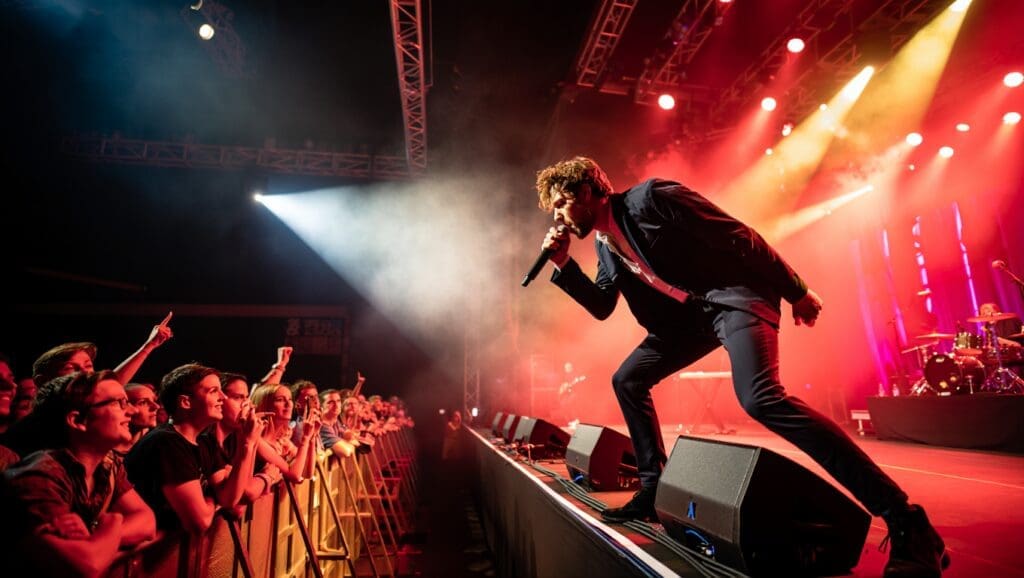
Yes, actual physical performances where you can see the whites of your audience’s eyes (and they can see yours, so perhaps ease up on the pre-show refreshments)! As album sales continue their death spiral and streaming pays approximately three pence per million plays, earning money from live performances is how many musicians keep the lights on and the Super Noodles in the cupboard.
Beyond the money, live shows are brilliant for meeting people and reaching new audiences. Look for opportunities to play festivals or open for established acts. There’s nothing like standing in front of strangers who’ve never heard of you and winning them over – or at least avoiding having pint glasses thrown at your head.
Don’t just stand there like a lemon, either. Plan your set, practice your banter, and for God’s sake, learn how to tune up quickly between songs. Nothing kills a vibe faster than five minutes of “ping… ping… ping” while you faff about with your guitar strings.
7. Get Some Love from Radio Stations Without Stalking the DJs
Radio might seem rather quaint in the streaming age, but getting your track played on even smaller radio stations helps reach audiences who might never find you otherwise. This can be DIY or through a radio plugger / promoter, depending on your budget and patience levels.
Local and university radio stations are particularly good starting points – they’re often more open to independent music and aren’t expecting you to sound like whatever landfill indie band is currently gracing the Radio 1 playlist. While you’re sorting radio, don’t neglect digital platforms – Spotify Promotion can get your tracks onto influential playlists while you’re charming the pants off local radio DJs.
Remember that radio people receive approximately ten billion submissions a day, so make yours stand out without being annoying. No glitter bombs in the envelope, please – they’re not amused and you’ll go straight on the blacklist.
8. Create a Killer Electronic Press Kit (EPK) That Doesn’t Scream “Amateur Hour”
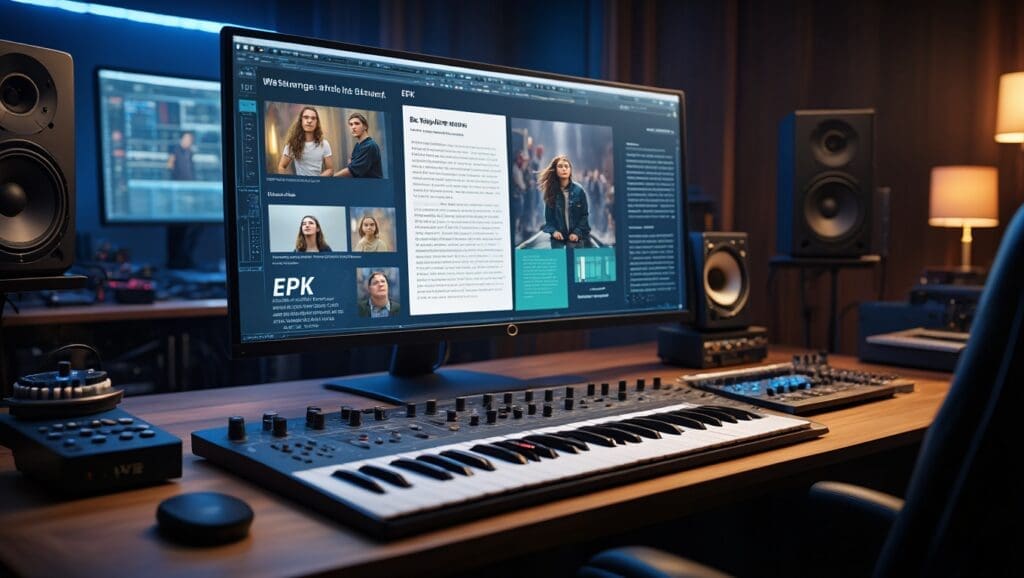
If you want industry professionals to take you seriously, you need a proper electronic press kit. This is essentially your musical CV – a collection of assets that tells people who you are without all the faff.
A decent EPK includes your bio (make it interesting, for God’s sake, not “we met at uni and like making music”), high quality photos (not just selfies with a ring light), music samples, music videos, press quotes (even if they’re just from your local paper), and contact info. Make it easy for lazy journalists and promoters to write about you or book you – they’ll appreciate not having to dig for basic details like a frustrated archaeologist.
Keep it updated too – nothing screams “we’ve given up” quite like an electronic press kit featuring photos from 2015 when your drummer still had hair and your sound was “up-and-coming indie folk” rather than “experimental synth-metal with Nordic influences.”
9. Meet Other Artists (Who Aren’t Complete Prats)
Get to know musicians in your area. Listen to their stuff, follow them online, attend their gigs, and generally be supportive without coming across as a stalker. After establishing these relationships, you can suggest collaborations, supporting each other at live shows, or even touring together.
This is all significantly easier if you’ve built genuine connections rather than suddenly appearing in their DMs begging for favors like some desperate X Factor reject. Meeting people in your scene is invaluable – just don’t be that person who only talks about themselves at the afterparty. Nobody likes the musician who corners you by the toilets to explain their concept album inspired by 17th-century maritime navigation.
10. Network with Industry Professionals (Without Being Desperate)
Beyond fellow musicians, develop relationships with other industry professionals – promoters, venue owners, DJs, journalists, and so on. Approach these relationships genuinely, not just with an eye toward what they can do for you.
Nothing sends people running faster than the sense they’re being used. Be patient – these connections may help you professionally someday, but that shouldn’t be your only motivation for greeting them at the bar. Nobody likes a chancer with business cards at a funeral.
Remember: these people can smell desperation like a dog can smell fear. Or like festival portaloos on day three – unmistakable and deeply unpleasant.
11. Getting Your Music on Streaming Platforms Without Getting Ripped Off
There’s more to streaming than just bunging your tracks on Spotify and hoping for the best. Getting your music on streaming platforms properly means ensuring your metadata is correct (boring but essential), your artwork doesn’t look like it was made in MS Paint, and your release strategy makes sense.
Most importantly, you need to work out how to direct people to your music once it’s out there. Streaming platforms are basically vast oceans of content where your beautiful song can easily disappear without a trace, like that one sock that goes missing in the washing machine.
Use a proper distribution service that doesn’t take the mickey with fees, make sure your profiles on each platform are fully completed (with those high-quality photos we mentioned), and learn how their playlist submission processes work. Getting onto editorial playlists can be like winning the lottery for indie artists, but you’ve got to be in it to win it.
12. Consider Music PR (DIY or Professional)
Media coverage can significantly boost your profile, and you have two options: hire professionals or do it yourself.
PR firms have established contacts and know how to pitch effectively, but they’re not cheap. The DIY approach requires creating a solid press kit, researching relevant media outlets, and sending personalized pitches.
It takes perseverance – expect plenty of ignored emails – but landing features in publications that match your audience can be worth the effort. Just remember to follow up without becoming that annoying person everyone dodges at industry dos. There’s a fine line between persistence and harassment, and that line is called “restraining order.”
Additional Thoughts from the Trenches
Commit to Your Music Marketing Strategy
Marketing campaigns require sustained effort and time. Be realistic about what you can handle alongside your other commitments – day job, studies, that failing relationship you’re desperately trying to save. Taking on more than you can manage will only lead to half-finished marketing efforts and wasted resources. Much like that concept album about Victorian chimney sweeps you started but never finished (admit it, we’ve all been there).
Learn the Data Game
Most of your digital marketing will happen online, so familiarize yourself with analytics. Understanding which content performs well, who’s engaging with it, and what’s driving traffic to your profiles will help refine your approach over time. It might not be as exciting as writing a new bridge for your epic seven-minute opus, but it’s vital for marketing success. Think of it as the musical equivalent of eating your vegetables. Necessary, slightly boring, but stops you dying young.
Ready to Take Your Music Career to the Next Level?
While these DIY techniques can work wonders, sometimes you need a bit more firepower to cut through the noise. If you’re serious about your music career and ready to stop mucking about, join Music Gateway today. They’ll help you distribute your tracks professionally, get your music on streaming platforms, and develop a proper music marketing strategy that actually works – all without requiring you to sell a kidney or sign away your firstborn.
Remember, in today’s music industry, brilliant marketing isn’t just nice to have – it’s bloody essential. Now get out there and make some noise about your noise, you magnificent musical maverick! They’re not going to discover themselves, are they?
Recommended Article
- Email Marketing for Musicians: Grow Your Fanbase with Email
- Master Email Marketing for Artists: Build Your Audience