


Music licensing might sound like dry legal jargon, but it has a direct impact on every artist’s wallet and creative freedom. Astoundingly, one bad contract can strip an artist of all their rights for years without them even realising. Plenty of musicians focus on the thrill of getting signed and miss the small print, yet the real edge comes from mastering these often-overlooked terms before ever picking up a pen.
Table of Contents
- Music Licensing Terms Every Artist Should Know
- Types of Music Licences and Their Uses
- Key Clauses in Music Licensing Agreements
- Avoiding Common Pitfalls in Music Licensing
Quick Summary
| Takeaway | Explanation |
|---|---|
| Understand your licensing rights. | Knowing performance, mechanical, and sync rights is crucial for protecting your music and ensuring proper compensation. |
| Negotiate key contract clauses. | Key clauses like termination, indemnification, and royalty structures can significantly affect your financial security and creative control. |
| Be cautious with rights ownership. | Always know exactly what rights you are signing away to avoid losing control over your music. |
| Focus on digital provisions in agreements. | Addressing digital use specifically can help protect your music on various modern platforms and prevent unexpected usage. |
| Implement robust royalty tracking. | Meticulous documentation and partnering with reputable organizations will ensure you receive all entitled earnings from your music. |
Music Licensing Terms Every Artist Should Know
If you’re a musician trying to turn your passion into a sustainable career, understanding music licensing terms is like having a secret map through the treacherous terrain of the music industry. Think of these terms as your musical legal superpowers – they protect your art, ensure you get paid, and open doors to incredible opportunities.
The Fundamental Rights Every Musician Must Understand
When we talk about music licensing, we’re essentially discussing the legal permissions that allow your music to be used in various contexts. Imagine your track being played in a blockbuster film, streamed on a popular playlist, or featured in a TV commercial. Each of these scenarios requires specific rights and agreements.
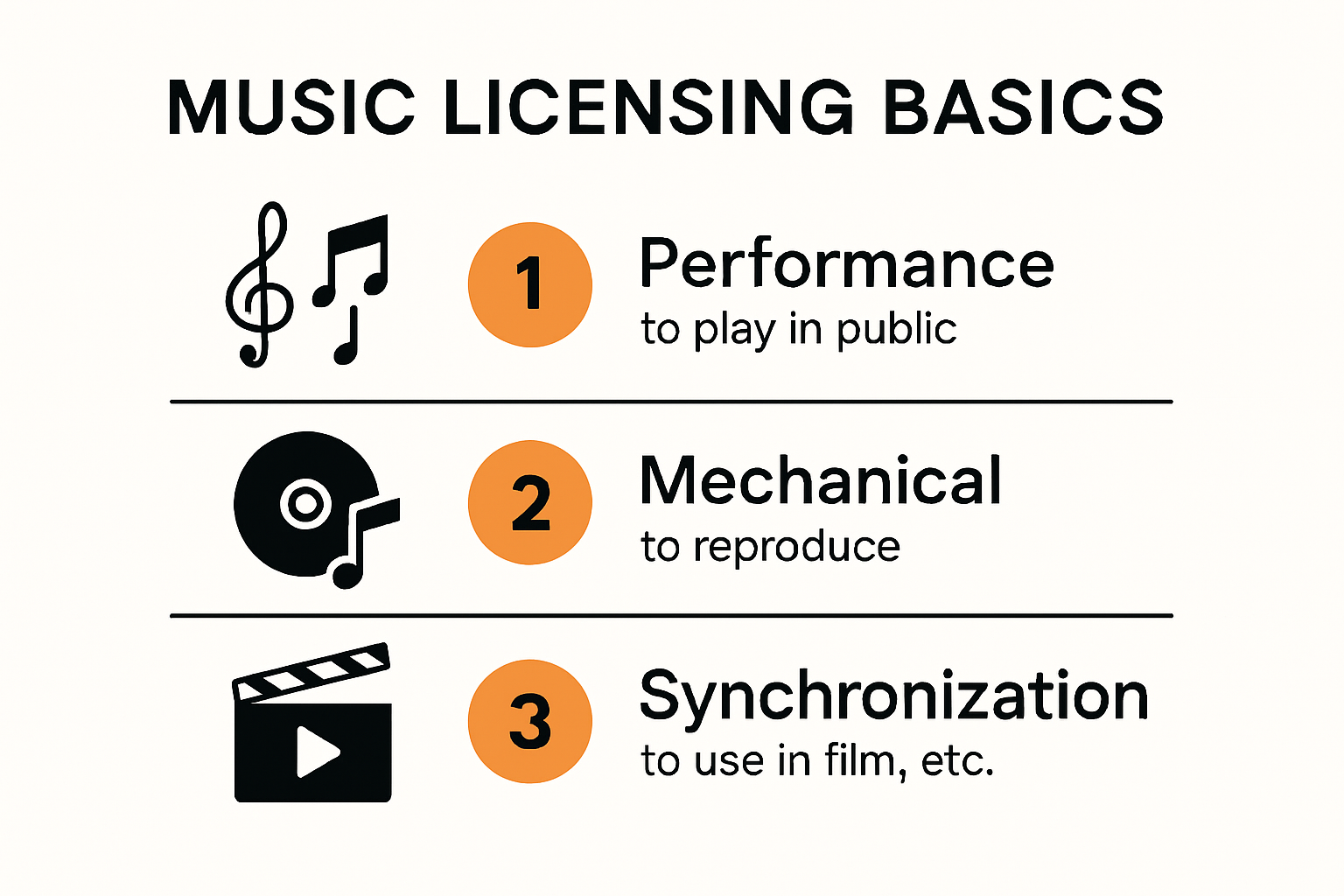
Performance Rights are your golden ticket. These cover live performances, radio play, and public broadcasts of your music. When your song gets played in a café, on the radio, or during a live event, performance rights ensure you receive royalties. Our detailed guide on music promotion can help you understand how to maximise these opportunities.
Mechanical rights are another crucial term. These cover the reproduction of your music in physical or digital formats – think streaming platforms, CDs, vinyl records, and digital downloads. Every time someone streams or purchases your track, mechanical rights determine how you get compensated.
Synchronisation Rights: Your Musical Gateway to Visual Media
Sync licensing is where the real magic happens for musicians looking to expand their reach. Synchronisation rights allow your music to be paired with visual content like films, TV shows, advertisements, video games, and online videos. A single sync placement can catapult an unknown artist into the spotlight faster than years of traditional promotion.
Understanding sync licensing means knowing the difference between master use rights (permission to use a specific recording) and publishing rights (permission to use the underlying composition). Some artists might own both, while others might need to negotiate with record labels or publishers.
Protecting Your Creative Territory
The term ‘territory’ in music licensing defines where your music can be legally used. A global license means worldwide usage, while a regional license might restrict your music to specific countries or regions. Always read the fine print and understand the geographical boundaries of your licensing agreements.
As an independent artist, you’ll want to be strategic. Some licensing deals might offer a flat fee, while others provide ongoing royalties. Negotiating the right terms can make a significant difference in your music career.
Pro tip: Consider working with a music distribution service that can help you navigate these complex licensing landscapes. They can provide expert guidance and ensure you’re not leaving money on the table.
Ready to take your music licensing knowledge to the next level? Join Music Gateway and unlock a world of professional music industry resources and opportunities. Your future self will thank you for making this smart move today.
Types of Music Licences and Their Uses
In the wild world of music, understanding different licensing types is like having a Swiss Army knife for your creative career. Each licence type represents a unique pathway for monetising and protecting your musical masterpiece. Let’s break down the most crucial music licence categories that can transform your artistic endeavour from a passion project to a professional pursuit.
Here’s a summary table comparing the main types of music licences and what they cover to help you quickly identify which is relevant for various uses:
| Licence Type | What It Allows | Common Scenarios | Who Collects Royalties |
|---|---|---|---|
| Performance | Public playing/broadcasting of music | Concerts, radio, cafés, live venues | Performance Rights Organisations (PROs) |
| Mechanical | Reproduction of recordings in physical/digital form | Streaming, CDs, downloads, vinyl | Publishers/Collection Societies |
| Synchronisation (Sync) | Use of music with visual content | Films, ads, TV shows, games, YouTube | Both Artist/Publisher and often Label |
Performance Licences: Your Musical Stage Pass
Performance licences are the golden tickets that allow your music to be played in public spaces. Think of them as magical permissions that let your tracks ring out in venues ranging from tiny local pubs to massive international festivals. When your song plays on radio, streams through a café’s speakers, or gets belted out at a live concert, performance licences ensure you receive proper compensation.
These licences cover multiple scenarios: live performances, broadcast on television or radio, digital streaming platforms, and public spaces. Performance Rights Organisations (PROs) like PRS in the UK play a critical role in tracking and collecting these royalties. Learn more about strategic music promotion to maximise your performance license potential and increase your track’s visibility.
Mechanical Licences: Digital and Physical Reproduction Rights
Mechanical licences are your digital and physical reproduction guardians. These licences cover every instance your musical recording gets reproduced – whether that’s a Spotify stream, a physical CD sale, or a digital download. For independent artists, understanding mechanical licences means ensuring you’re compensated every time someone enjoys your music.
The digital music ecosystem has dramatically transformed mechanical licensing. Streaming platforms now handle much of the complex licensing infrastructure, but savvy artists still need to understand the nuances. A mechanical licence typically involves paying a set royalty rate per reproduction, which varies depending on the format and distribution method.
Synchronization Licences: Your Gateway to Visual Media
Sync licences are where musical magic meets visual storytelling. These licences permit your music to be paired with visual content like films, TV shows, advertisements, video games, and online videos. A single sync placement can catapult an unknown artist into the spotlight faster than years of traditional promotion.
Understanding sync licensing means recognising two critical components: master use rights (permission to use a specific recording) and publishing rights (permission to use the underlying composition). Some artists might own both, while others might need to negotiate with record labels or publishers. Explore our music distribution services to help navigate these complex licensing landscapes.
Pro tip for emerging artists: Always read licensing agreements carefully. The devil is in the details, and a seemingly small clause can significantly impact your musical journey. Protect your creative work by understanding each licence’s specific terms and potential revenue streams.
Ready to transform your musical passion into a professional career? Join Music Gateway and unlock a world of professional music industry resources and opportunities. Your future self will thank you for making this smart move today.
Key Clauses in Music Licensing Agreements
Welcome to the legal jungle of music licensing agreements, where the fine print can make or break your musical dreams. These contracts are more than just boring paperwork; they’re your financial lifeline and creative protection mechanism. Understanding the key clauses is like having a musical superhero shield that guards your artistic interests.
Below is a summary table outlining some of the key clauses found in music licensing agreements, what they mean, and their importance for artists:
| Key Clause | Description | Importance for Artists |
|---|---|---|
| Representations & Warranties | Legal promise of ownership/originality & right to license music | Prevents legal disputes; builds trust |
| Termination | Outlines how/when agreement can be ended by either party | Enables exit if partner breaches contract |
| Reversion | States if/when rights revert to the original artist | Regains creative control if conditions are unmet |
| Indemnification | Specifies who covers losses in legal disputes | Shields from unexpected liability |
| Royalty Structure | Details payment method, amounts, and sources | Directly impacts artist income and long-term earnings |
Representations and Warranties: Your Legal Safety Net
Representations and warranties are the foundational legal promises that form the bedrock of any music licensing agreement. Think of them as your contractual truth serum. When you sign, you’re essentially declaring that everything you’re claiming about your music is 100% legit. For artists, this means confirming you actually own the rights to the music, there are no hidden copyright conflicts, and you have the full authority to license the track.
These clauses protect both parties. The licensor (you, the artist) guarantees the music’s originality and ownership, while the licensee gets assurance they won’t accidentally step into a legal minefield. Our music distribution experts can help you navigate these complex legal waters and ensure your representations are rock solid.
Termination and Reversion Clauses: Your Escape Hatch
Termination clauses are your contractual emergency exit. They define precisely under what circumstances either party can walk away from the agreement. Some scenarios might include repeated breaches of contract, failure to meet financial obligations, or significant changes in business circumstances. For musicians, these clauses are crucial because they provide a structured way to reclaim your creative rights if things go sideways.
Reversion clauses are particularly interesting. They specify conditions under which music rights return to the original artist. This might happen after a certain time period, if specific commercial targets aren’t met, or if the licensee fails to exploit the music effectively. It’s like having a musical boomerang that comes back to you if the other party doesn’t play by the rules.
Indemnification and Royalty Structures: Protecting Your Musical Investments
Indemnification clauses are your legal bodyguards. They outline who’s responsible if something goes wrong, like a copyright dispute or unexpected legal challenge. Typically, these clauses require one party to compensate the other for any losses arising from breaches of the agreement. For independent artists, this means understanding exactly what financial risks you might be taking on.
Royalty structures are where the money magic happens. These clauses detail exactly how and when you’ll get paid. Will it be a flat fee? A percentage of revenues? Royalties based on streams, downloads, or sync placements? The devil is in the details, and a well-negotiated royalty clause can mean the difference between getting paid peanuts or securing a sustainable income from your music.
Pro tip for emerging artists: Never sign anything without fully understanding every single clause. If legal jargon makes your head spin, consider consulting with our music promotion experts who can help you decode these complex agreements.
Ready to take control of your musical destiny? Join Music Gateway and unlock professional resources that’ll transform your understanding of music licensing. Your future self will thank you for making this smart move today.
Avoiding Common Pitfalls in Music Licensing
The music licensing world can feel like navigating a musical minefield blindfolded. One wrong step can obliterate your artistic dreams and financial prospects. Understanding and sidestepping these potential catastrophes isn’t just smart – it’s survival for independent musicians looking to protect their creative work and secure sustainable income.
Rights Ownership Confusion: Know What You Actually Own
Many musicians accidentally sign away their rights without fully comprehending the implications. Understanding precisely what rights you own is crucial. Are you signing away your master recordings? Your publishing rights? Your synchronization permissions? Each of these represents a different slice of your musical pie.
Some artists unknowingly transfer complete ownership of their work, thinking they’re just granting a temporary license. This rookie mistake can mean losing control over how your music gets used. Our music distribution experts can help you parse these complex ownership structures and ensure you’re not inadvertently giving away the farm.
Pro tip: Always have a legal professional review contracts before signing. What seems like standard boilerplate language could be a trap that limits your future creative and financial opportunities.
Digital Use Provisions: The Modern Licensing Minefield
Digital platforms have transformed music licensing, creating intricate new challenges. Streaming, social media use, and podcast integrations – these weren’t even concepts a decade ago. Modern licensing agreements must account for these evolving digital landscapes.
Artists need robust clauses that specifically address digital reproduction rights. This means clearly defining how your music can be used across platforms like Spotify, YouTube, TikTok, and emerging social media channels. Without precise language, you could find your track being used in ways you never anticipated or approved.
Consider the nuances: Does your license cover user-generated content? Algorithmic playlists? Partial song snippets? These details matter enormously in the digital ecosystem. Check out our comprehensive music promotion strategies to understand how to protect your digital rights effectively.
Royalty Tracking and Transparency: Protecting Your Financial Interests
Royalty structures are notoriously complex, with multiple revenue streams that can quickly become overwhelming. Independent artists often struggle to track all their potential income sources – live performances, streaming, sync licensing, and mechanical royalties.
The key is meticulous documentation and working with transparent partners. Understand exactly how royalties are calculated, when they’re paid, and through what mechanisms. Some licensing agreements include complicated formulas that can significantly reduce your actual earnings.
Don’t become another statistic of musicians who never see their rightful earnings. Implement robust tracking systems, work with reputable Performance Rights Organisations, and always maintain detailed records of your musical works and their licensing history.
Remember, knowledge is your most powerful weapon in the music licensing battlefield. A few hours of careful research and professional consultation can save you from years of potential legal and financial headaches.
Ready to take control of your musical destiny? Join Music Gateway and unlock professional resources that’ll transform your understanding of music licensing. Your future self will thank you for making this smart move today.
Frequently Asked Questions
What are the essential music licensing terms every artist should know?
Understanding fundamental rights such as performance, mechanical, and synchronization rights is crucial for protecting your music and ensuring you receive proper compensation.
How do performance licences work in music licensing?
Performance licences allow your music to be played in public spaces like concerts, radio, and cafés, ensuring you receive royalties when your songs are performed or broadcast.
What is the difference between sync licences and mechanical licences?
Sync licences allow your music to be paired with visual media, such as films and advertisements, while mechanical licences cover the reproduction of your music in both physical and digital formats, like streaming and CDs.
Why is understanding key clauses in music licensing agreements important?
Key clauses, such as termination, indemnification, and royalty structures, can significantly affect your financial security and creative control. Knowing these can help you navigate contracts effectively.
Master Music Licensing with Complete Confidence
Feel lost when trying to unravel music licensing contracts? If the idea of synchronisation rights, performance royalties, or legal fine print leaves you unsure, you are not alone. Many artists feel overwhelmed by the risk of signing away their creative control or missing out on well-deserved royalties. Your goal is to protect your music and maximise its reach, but traditional industry barriers can make that a challenge.
At Music Gateway, you will find all the support you need under one roof. We simplify every step of the licensing journey, from sync licensing to global music promotion. Our experienced team helps you avoid the common pitfalls highlighted in the article, such as unclear digital rights or confusing royalty structures, ensuring your music always works for you. Discover how successful artists have transformed their careers by taking charge of music rights and promotion with our comprehensive music promotion tools.
Recommended Article